
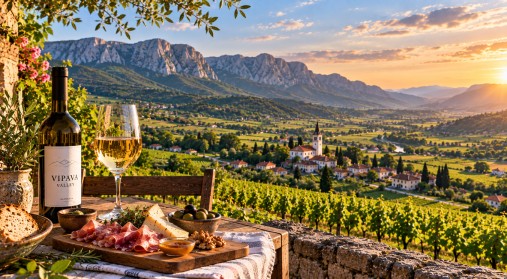
Tucked away from Slovenia’s bustling tourist hotspots, the Vipava Valley offers a tranquil retreat marked by its lush vineyards, towering mountains, quaint villages, and a deep-rooted agricultural heritage. Situated in the southwest of Slovenia, the valley is about an hour’s drive from Ljubljana and lies close to the Italian border. Its picturesque landscape is characterized by the meandering Vipava River, expansive agricultural plains, and steep karst hills draped in vineyards and woodlands.
The region’s climate is notably shaped by the burja, a formidable seasonal wind that originates from the Alpine region. This unique combination of gusty winds, dry conditions, and karst soil has fostered a unique agricultural and winemaking tradition that defines the valley. Wine production is a cornerstone of the local economy, with vineyards blanketing the valley’s slopes, while numerous small wineries and wine estates invite visitors to savor regional varieties and discover traditional winemaking techniques.
Culinary delights also beckon visitors to the valley, with a food culture that showcases mature cheeses, fresh goat and sheep products, cured meats, vegetables, herbs, and classic Slovenian recipes. Many restaurants and farm-based dining venues emphasize locally sourced ingredients, ensuring an authentic taste of the region. Additionally, the valley’s villages are increasingly becoming integral to the tourism experience, as old farmhouses and rural properties undergo renovations to provide accommodation, thereby preserving traditional structures while bolstering local tourism.
Nature enthusiasts will find a wealth of opportunities for exploration in the valley. Scenic cycling routes link vineyards and villages, while numerous walking trails venture into the surrounding hills. The region’s diverse terrain also caters to those interested in paragliding and other outdoor activities. For history buffs, the Roman heritage of Ajdovščina and the historical streets of Vipavski Križ offer a glimpse into the past. Meanwhile, the area around Nova Gorica provides insight into the unique cultural landscape shaped by the Slovenian-Italian border.
Unlike areas dominated by large hotels and mass tourism, the Vipava Valley is evolving through smaller accommodation providers, farms, wineries, restaurants, and activity operators. This approach lends the region a distinctly rural charm while offering new and enticing reasons for visitors to explore. With its rich blend of gastronomy, wine, natural beauty, and historical allure, the Vipava Valley is emerging as a sought-after destination for travelers seeking a serene alternative to Slovenia’s more frequented tourist areas.