
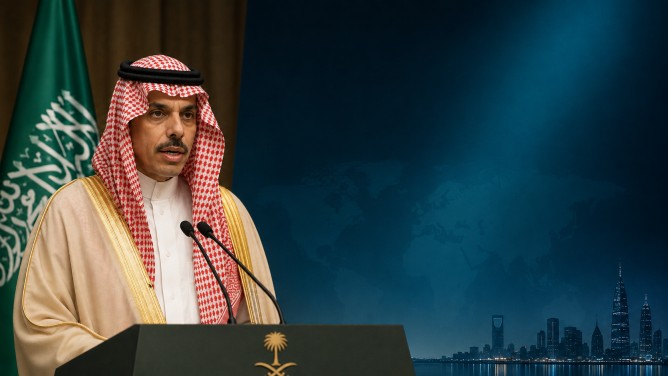
At a recent G20 finance meeting in the United States, Saudi Arabia’s Finance Minister Mohammed Al-Jadaan emphasized the need for bolstering economic resilience to withstand future global disruptions. Al-Jadaan pointed to rising vulnerabilities within the global economy, urging countries to create alternative production sources, manage inventories efficiently, and ensure their critical infrastructure has adequate spare capacity to better absorb economic shocks.
Al-Jadaan advocated for policies that underpin long-term, sustainable economic growth. He asserted that governments must identify constraints hindering growth and modify their policies according to evolving economic conditions. Furthermore, he addressed global economic imbalances, suggesting that trade surpluses and deficits should be evaluated alongside domestic financial conditions and the unique structural factors shaping each economy.
The finance minister also called for a more robust international strategy concerning sovereign debt management. He argued that governments should focus not only on responding to debt crises but also on preventing the accumulation of debt that fails to yield sustainable economic or developmental benefits.
Meanwhile, Saudi Central Bank Governor Ayman Al-Sayari highlighted the Kingdom’s economic robustness, noting that inflation has been contained despite external threats, with an average rate of 1.8% during the first seven months of 2026. The non-oil sector of Saudi Arabia’s economy continued to grow, driven by structural reforms, increased private sector involvement, and investment. Factors such as a stable labor market, government expenditure, and ongoing development projects further supported domestic demand and growth.
Al-Sayari also mentioned that geopolitical tensions and disruptions in global trade and energy flows remain significant risks. However, he noted that Saudi Arabia’s diverse logistics and energy infrastructure has helped mitigate the impact of such external disruptions. The Kingdom’s overall unemployment rate dropped to a historic low of 3.1% in the first quarter of 2026, with unemployment among Saudi nationals at 6.4%.