
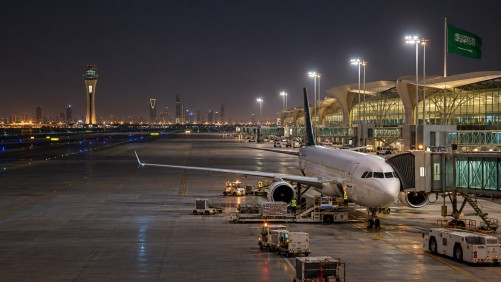
In the wake of intensified Houthi missile attacks, Saudi Arabia has taken the precautionary step of suspending flights at Riyadh’s main international airport until Saturday. This decision comes after a series of assaults that have not only resulted in fatalities and injuries but have also highlighted vulnerabilities in the kingdom’s air defense systems. The recent attacks reportedly killed 13 individuals and injured over 300, prompting a reassessment of aviation safety and broader security measures.
The Houthis have escalated their offensive, targeting Saudi cities with additional missile launches on Monday. This has led to significant disruptions in aviation operations, with several airlines opting to cancel flights. Previous Houthi strikes have reportedly caused damage to aircraft and fuel facilities linked to Riyadh airport, underscoring the ongoing threat to critical infrastructure.
Saudi authorities are urgently reviewing how these missile attacks have been able to breach their defense systems, which are tasked with safeguarding a vast array of government buildings, airports, energy facilities, and infrastructure hubs. Despite these challenges, Saudi officials are working to reassure international investors and energy markets. Energy Minister Prince Abdulaziz bin Salman has emphasized the nation’s resilience, while Saudi Aramco’s chief executive Amin Nasser has warned that threats to the region’s energy infrastructure could have far-reaching effects on global economies.
The Houthis have issued further warnings of potential attacks on Saudi airports and oil facilities, advising workers to avoid these sites. They have also threatened retaliation should the United States become directly involved in military operations against Yemen. Meanwhile, fighting has persisted in Yemen, particularly around the city of Taiz, where Saudi airstrikes have targeted Houthi positions, exacerbating humanitarian conditions in the region.
Diplomatic efforts to resolve the conflict remain uncertain, with Iran exploring the possibility of mediating between Saudi Arabia and the Houthis. However, temporary ceasefire proposals have yet to yield a consensus. The Houthis are calling for a comprehensive political settlement, cautioning that ongoing hostilities could further destabilize the region and lead to increased losses for all parties involved.
The escalation of violence poses a significant threat to Saudi Arabia’s efforts to maintain regional stability and diversify its economy beyond oil. Continued attacks on vital infrastructure may disrupt travel, erode investor confidence, and intensify uncertainty within global energy markets.