
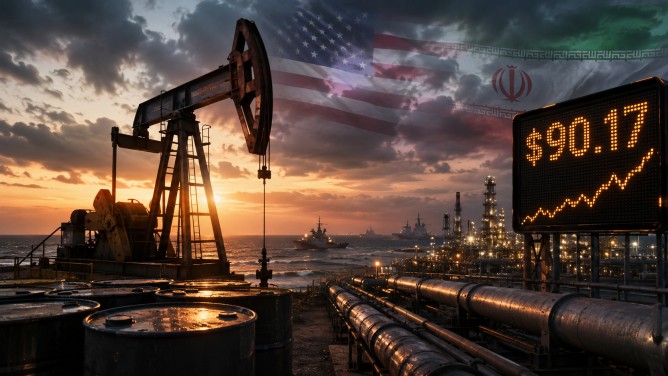
Oil prices have surged significantly following the expiration of a two-month negotiation period between the United States and Iran without reaching a peace agreement. This development has intensified concerns over the potential continuation of the conflict and its impact on global energy supplies. Brent crude has climbed above the $90 mark, trading at approximately $91.63, marking its highest level since July 30. The price hike comes in the wake of US President Donald Trump’s demand for Iran to surrender, with warnings that the situation could escalate if diplomatic efforts remain unfruitful.
The strategic Strait of Hormuz, a vital maritime corridor for global oil shipments, has become a focal point of concern as the number of commercial vessels navigating the route has dwindled considerably. This decline has sparked fears of extended disruptions in oil supplies. Iran has signaled the possibility of adopting a more assertive military posture should negotiations falter, further amplifying worries about the safety of maritime activities in the region. Reports of an attack on a cargo vessel transiting the strait have exacerbated these concerns, underscoring the precariousness of shipping security in the area.
In response to these developments, investors are bracing for what could be a prolonged disruption to oil supplies. Any sustained closure or reduction in traffic through the Strait of Hormuz is likely to exert additional upward pressure on crude prices. As the situation unfolds, the energy market remains on edge, with stakeholders closely monitoring the geopolitical landscape for any signs of resolution or escalation.
Analysts caution that the persistent conflict in the Middle East, coupled with the ongoing war in Ukraine, could deliver further shocks to global energy markets. The dual crises pose the risk of driving oil and gas prices even higher, with potential ripple effects across various sectors of the global economy. Stakeholders are urged to remain vigilant as the dynamics of these conflicts continue to evolve, affecting not only regional stability but also the broader economic environment.