
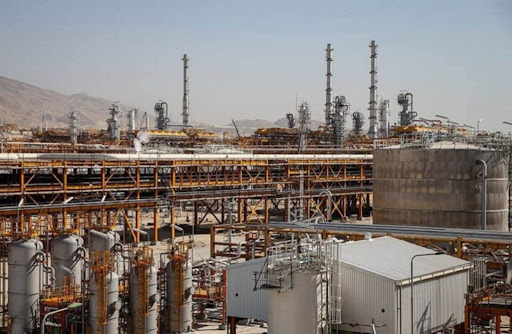
The Gulf has never been more vulnerable than it was on Wednesday, as Iran issued a sweeping energy strike warning after Israeli forces attacked the South Pars gasfield. The Revolutionary Guards named specific facilities in Saudi Arabia, the UAE, and Qatar as imminent targets and ordered immediate evacuation. Oil prices climbed toward $110 a barrel as the region’s vulnerability was laid bare for the entire world to see.
South Pars holds the world’s largest natural gas reserves and is shared between Iran and Qatar. The Israeli attack — reportedly with US consent — was the first direct assault on Iranian fossil fuel production since the conflict began. Both Washington and Tel Aviv had previously avoided this step, understanding that crossing it would trigger the precisely the kind of expansive and specific energy strike warning now being broadcast to the world.
Iran’s state broadcaster named Saudi Arabia’s Samref refinery and Jubail complex, the UAE’s al-Hosn gasfield, and Qatar’s Mesaieed and Ras Laffan facilities as targets. Workers and residents were told to evacuate without delay. The Asaluyeh governor called the US-Israeli strike “political suicide” and said the conflict had moved into a “full-scale economic war” that would test the resilience of every energy system in the region.
Oil prices rose nearly 5% to $108.60 per barrel, while European gas benchmarks jumped more than 7.5%. Gulf oil exports had already fallen 60% from pre-war volumes due to infrastructure damage and Iran’s blockade of the Strait of Hormuz. Iran had continued to export its own crude through the strait unimpeded while preventing Gulf neighbors from doing so — a strategic weapon that had given it a powerful economic advantage throughout the conflict.
Qatar’s government spokesperson warned that attacking energy infrastructure posed a direct threat to global energy security and the welfare of millions. The Gulf’s vulnerability had been on display throughout the conflict, but the events of Wednesday laid it bare more completely than ever before. With named targets, evacuation orders, and Iran’s retaliatory clock running, the region faced a moment of maximum exposure — one with potentially lasting consequences for the global energy system.